

In this issue of The Upworthiest, Evan Porter rounds up seven "bad" things kids do that are secretly green flags for the grownups raising them. Then, an 11-hour rescue in Romania that came down to one skinny seventh grader and a hospice nurse with 20 years of experience shares the advice families least want to hear.
 | ||
Experts share counterintuitive signs that you're doing a good job raising your kids. | ||
7 ‘bad’ things your kids do that actually mean you’re a good parent | ||
Surprisingly, when they save their worst behavior for you, that’s a good sign. | ||
By Evan Porter | ||
Parenting experts say that sometimes the signs that we’re raising good kids don’t look how we might expect them. | ||
Here are some counterintuitive, seemingly negative behaviors we sometimes see in kids that are actually bright green flags that Mom and Dad are doing a bang-up job. | ||
|
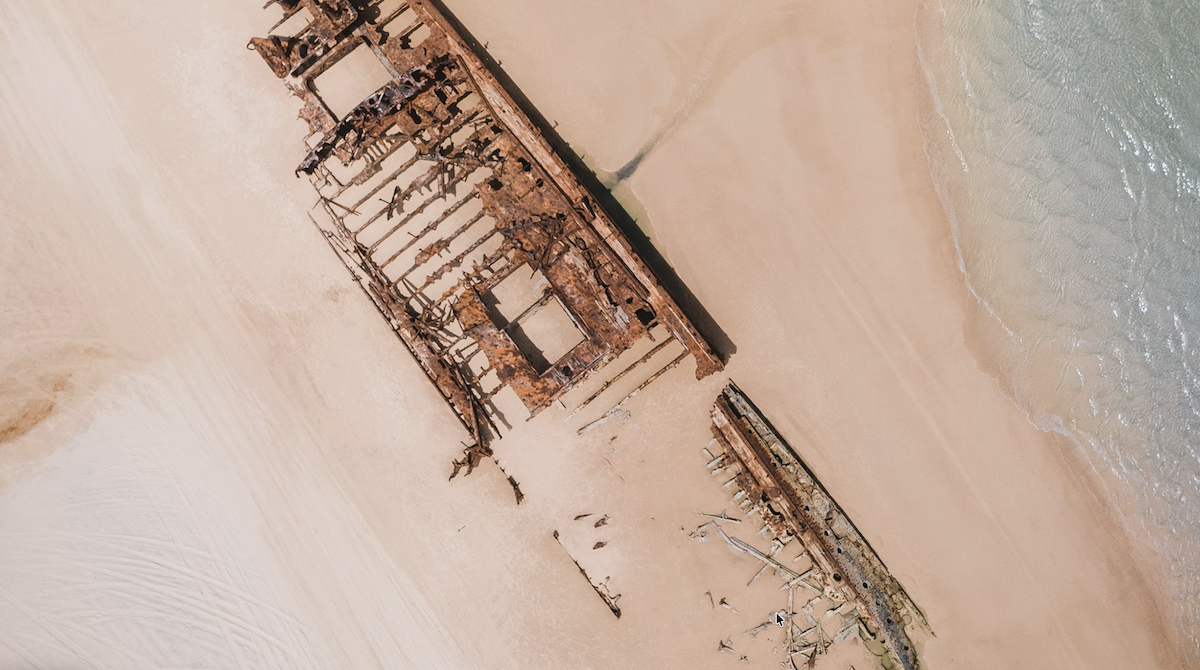 | ||
Representative image of an abandoned ship on a desert island. | ||
His boat broke down on the way to Polynesia. He stayed on the island for 32 years. | ||
In 1989, Mauro Morandi set sail for the South Pacific. He never made it. | ||
By Adam Albright-Hanna | ||
In 1989, Mauro Morandi set sail for Polynesia on a refurbished catamaran. He didn’t make it. | ||
A failed engine washed the former physics teacher onto the shores of Budelli, a mile-square island off Sardinia’s coast famous for its pink sand. When he learned the island’s sole caretaker was preparing to retire, Morandi sold his boat on the spot, according to National Geographic in 2021. | ||
He took the job and stayed 32 years, alone. | ||
|
“Great taste” 🤣

After 11 hours, rescuers gave up on the boy in the well. Then a 14-year-old hero stepped in. | ||
He’s now a professional firefighter. | ||
By Adam Albright-Hanna | ||
In April 2013, a three-year-old boy named Gabriel fell into a well in the yard of his family’s home in Segarcea, a small town in Dolj County, Romania. The well was about 15 meters deep and barely wide enough for a slender teenager to squeeze through. Professional rescue crews arrived quickly. They tried everything available to them: shovels, a tractor, specialized equipment, different angles of approach. None of it worked. Hours passed. | ||
After eleven hours, according to accounts that circulated widely at the time via CVL Press in Romania, a firefighter finally said aloud what everyone had started to fear: “There’s no more hope. The well is too narrow.” | ||
At that moment, a 14-year-old boy named Cristian Marian Becheanu stepped forward. He was a seventh-grade student from the area, thin enough to fit where the adults could not. He told the crew he wasn’t afraid. He said he would go in. | ||
|
An Upworthiest Quiz
What does the distress signal “SOS” officially stand for?
Yesterday's Results
In yesterday's issue, we shared a 104-year-old Navy veteran and her delightfully specific Skippy peanut butter habit.
And we asked: Botanically speaking, what is a peanut? A commanding 87.1% of you knew it was a legume. That’s two quizzes in a row you’ve dunked on me! I’m going to ramp up the difficulty in the future… starting today? Check back tomorrow.
A tree nut (3.6%)
A seed (7.8%)
A legume (87.1%) 🏆
A grain (1.5%)
 | ||
Hospice nurse of 20 years explains why families should avoid keeping a loved one alive at all costs | ||
Hard conversations about “life goals” are absolutely vital when someone is critically ill. | ||
By Annie Reneau | ||
A hospice nurse who uses her experience to educate and inform people about death and dying has advice that might be difficult to hear: stop trying to keep your loved ones alive at all costs. | ||
When someone you love is critically ill, decisions about medical care can be tough. Despite impressive advancements, medicine isn’t an exact science, and families and medical teams must work together to determine what course of action offers the best chance of the desired outcome. | ||
Those decisions become tougher when critical illness becomes terminal illness. Naturally, no one wants their loved one to die. But as Hospice Nurse Julie explains, some outcomes are worse than death. | ||
|

