
Today, in the Upworthiest...
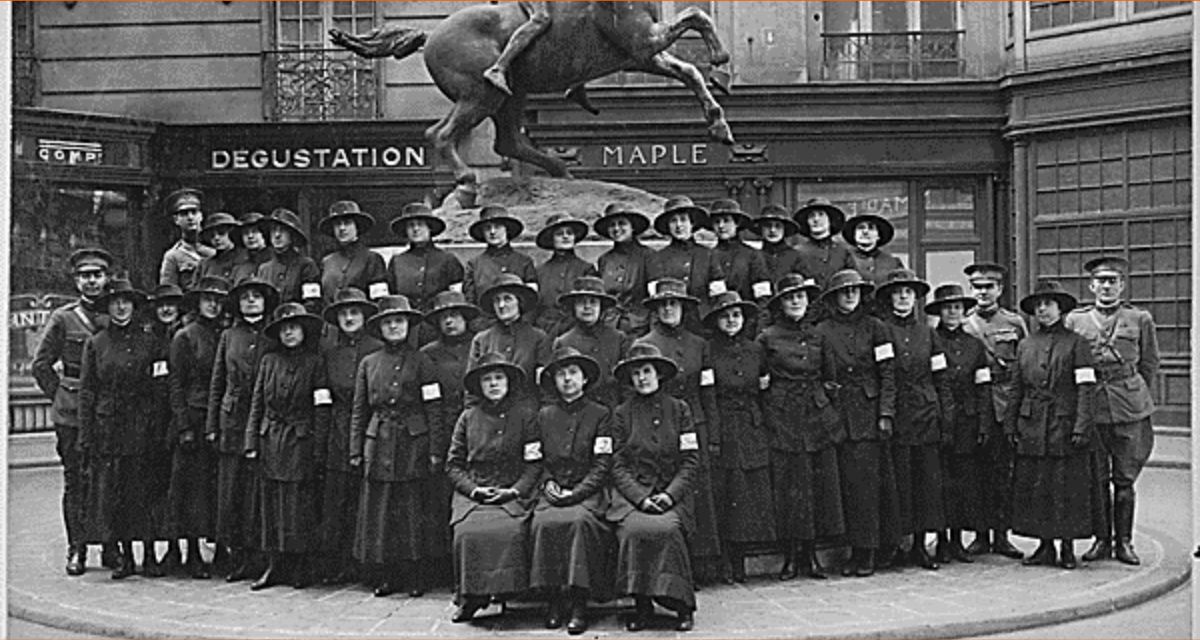 | ||
America’s first female soldiers served during WWI. Here’s why they were known as ‘Hello Girls.’ | ||
The “Hello Girls” worked as telephone operators in the U.S. Army Signal Corps. | ||
By Emily Shiffer | ||
World War I began on July 28, 1914, following the assassination of the Austro-Hungarian Archduke Franz Ferdinand and his wife. However, the United States did not officially enter the conflict until April 6, 1917. | ||
During The Great War, the U.S. Army needed extra communication support via telephone switchboard operators. So, General John J. Pershing, commander of the American Expeditionary Forces, began recruiting women who were fluent in both English and French to support U.S. efforts in France. | ||
These brave women became the first female soldiers in the U.S Army, and went on to be known as “Hello Girls” thanks to their swift communication and switchboard skills. The term is thought to have originated from greetings sent between the phone caller and operator. | ||
|
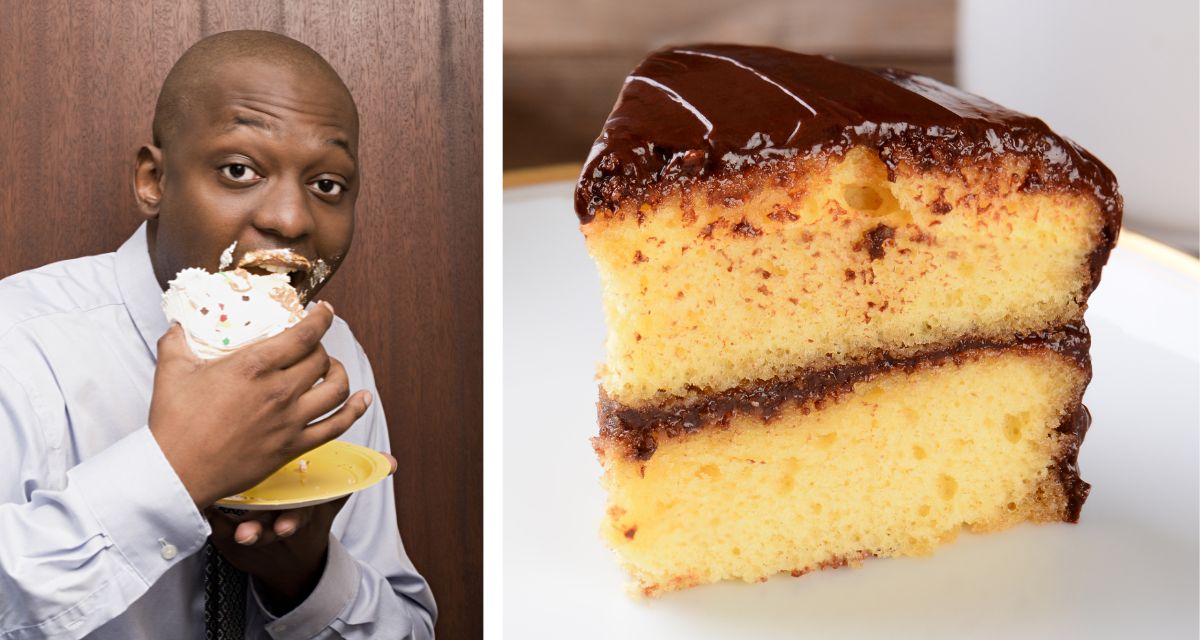 | ||
Man enjoying cake (left) Yellow cake with chocolate frosting (right) | ||
‘Don’t listen to that box. Listen to me.’ People are drooling over ‘melt-in-your-mouth’ cake hack. | ||
Breaking the rules never tasted so good. | ||
By Heather Wake | ||
Sure, you could follow the recipe on the back of your box cake to a T, and it would likely be perfectly fine. But life is short. Why not make that box cake the “best cake you could ever make in your life?” One that “literally melts in your mouth”? | ||
This is the result promised by baking enthusiast Kendric Jacobs, who’s taken TikTok by storm with his now-viral box cake hack. | ||
|
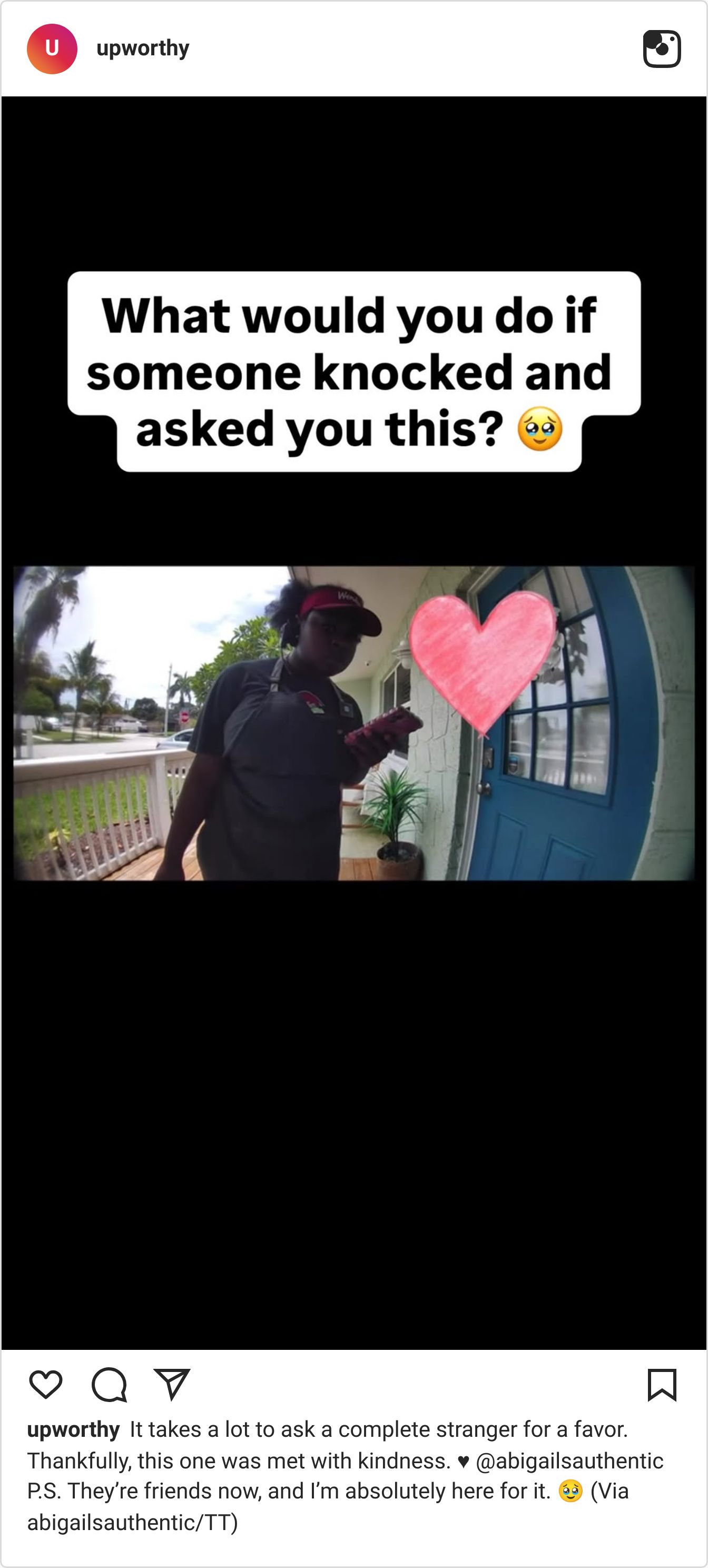
It takes a lot to ask a complete stranger for a favor. Thankfully, this one was met with kindness. ♥️
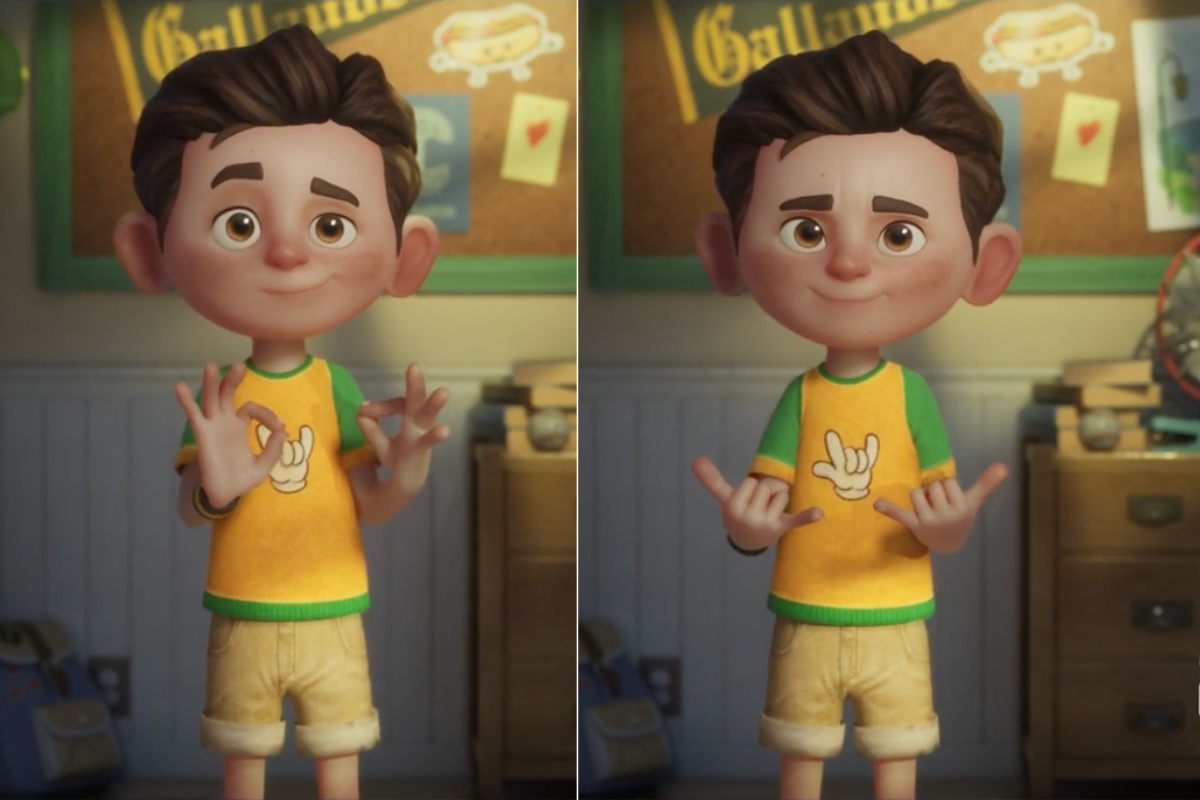 | ||
A Disney artist brought his animation skills to the world of American Sign Language. | ||
‘Frozen’ animator launches an interactive ASL learning app and vows to keep it free forever | ||
Josh Staub created the app as a labor of love alongside Deaf animators, engineers, and other collaborators. | ||
By Evan Porter | ||
Josh Staub has had quite a career. The renowned Disney animator and visual effects artist has worked on some of the biggest hits of the modern era, including Wreck-It Ralph, Tangled, and the iconic Frozen—which is more of a phenomenon than just a film. | ||
But despite the accolades, he was ready for a new challenge. A few years ago, he began developing a script for a new animated series—a project that would take him on an incredible and unexpected journey. | ||
|
An Upworthiest Quiz
When did ASL get its start?
Yesterday’s Results
Yesterday we shared the exciting announcement of our own Evan Porter’s most recent book release about couples attacking their bucket list before the arrival of a new baby.
We asked you, Upworthy readers, what's still on your bucket list?
Over 36% of you are hoping to take that big, long-dreamed-of trip.
A big trip I keep almost booking (36.7%)
A creative thing I swear I'll finish (30.8%)
Something brave I'm too chicken for (11.7%)
Honestly? I peaked, and it was nice (20.8%)
Upworthy reader Slanza has an enviable plan. “I have always wanted to live in Europe, probably Spain, travel around to the surrounding countries. I’d love to feel comfortable with all the unknowns, new food, people, history.”
 | ||
A simple neuroscience brain trick to stay quiet instead of saying impulsive things you’ll regret | ||
Calm body, closed mouth. | ||
By Tod Perry | ||
There are times to speak up, moments when it’s best to say nothing, and opportunities be very considerate in your response. But when you’re on the receiving end of a back-handed compliment, a foolish remark, or a coworker takes you down a peg, and your emotions are up, it can be hard to have a thoughtful response. Often, we say something we shouldn’t. | ||
How is it that some folks fly off the handle and say things they’ll later regret, while others can stay calm and remove themselves from the situation or take the high ground? One way to be less impulsive with your words is to use the “name it to tame it” neuroscience hack, originally coined by author and psychiatrist Dr. Dan Siegel. When used properly, it allows you to step back from the moment and choose the best response in a challenging situation. | ||
|
