

Emily Shiffer, who has a knack for finding fascinating things hiding in plain sight, kicks us off with 25 purchases frugal people decided they could live without. Elsewhere: the weirdly nostalgic history of red quarters, a way to recover memories that feel long gone, and meet the “otrovert,” which may finally explain a few of you.
 | ||
Frugal people share 25 things they stopped buying completely to save money | ||
There’s so much we buy and use simply out of habit. | ||
By Emily Shiffer | ||
Saving money is never a bad thing. And for those looking for economical solutions for how to cut back on spending, a smart place to start is taking an inventory of your spending habits and what you buy. | ||
In an online forum of frugal people, member TS1664 posed the question to fellow savvy financial members: “What’s something you stopped buying completely and don’t miss at all?” | ||
They continued, “For me it’s paper towels. Switched to rags and microfiber cloths a year ago and haven’t looked back. I used to go through a roll a week without thinking, now I just toss the cloths in with regular laundry. Saves money and space.” | ||
|
Tired of news that feels like noise?
Every day, 4.5 million readers turn to 1440 for their factual news fix. We sift through 100+ sources to bring you a complete summary of politics, global events, business, and culture — all in a brief 5-minute email. No spin. No slant. Just clarity.
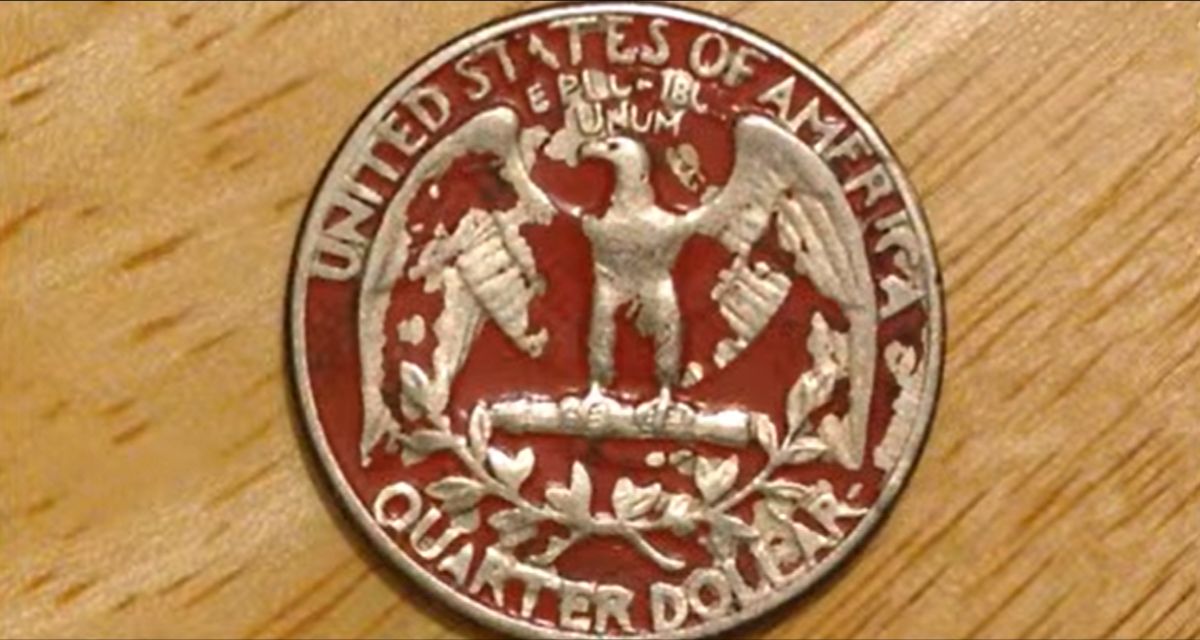 | ||
The nostalgic reason some quarters were painted red in the 1960s | ||
Finding one is a throwback for Baby Boomers and Gen Xers. | ||
By Emily Shiffer | ||
Finding a red quarter is a rare occurrence. So if you’ve ever gotten one back in your change, or found one in your pocket change, it probably piqued your interest. | ||
Why was it painted red? Baby Boomers and Gen Xers may be familiar with these colorful coins. | ||
Red quarters had a specific musical purpose beginning in the 1950s. However, their use continued to evolve throughout the ’60s, ’70s, ’80s and ’90s. | ||
|
Raise your hand if you can relate. 🙋♂️😂

 | ||
Neuroscientists share how to ‘revive’ memories that you thought you had forgotten forever | ||
A lot of the memories that you thought were gone forever can be retrieved. | ||
By Tod Perry | ||
When most people forget things that happened in the past or how to tackle specific tasks, they think that the memory is gone forever. They will have to relearn the skill, and once a memory is forgotten, it’s like the event never happened. However, new research shows that when we forget things and can’t recall them, there’s still an opportunity to retrieve the memory. Like finding a lost file in a computer, you have to find the right place to look. | ||
A new study published in Cell found that when your brain updates your memory, it does some strategic formatting where it intentionally forgets some experiences or pieces of information to make room for new information. That’s a tough pill to swallow when you spent all day trying to learn a new program on your computer, only to forget what you did a few days later. | ||
|
An Upworthiest Poll
Your brain offers to restore one lost file. What are you recovering?
Last Week’s Results
In Friday's issue, we shared Heather Wake's story about the 100-year-old flute player who asked a band for some blues in C, then joined in and stole the show.
And we asked: Which country has the most people aged 100 or older? Nearly 85% of you nailed it: Japan. This one wasn't particularly close.
Italy (5.2%)
United States (1.8%)
Japan (84.9%) 🏆
Greece (8.1%)
Upworthiest reader Jan Diesel knew the right answer and has a personal interest in the subject. “I read about it recently, being 99 myself.”
 | ||
There’s a new personality type called the ‘otrovert’ and one major trait sets it apart | ||
You’re not an introvert. You’re not an extrovert. You’re not even really an ambivert. So what are you? | ||
By Cecily Knobler | ||
So many of us have the desire to compartmentalize our personality traits into neat little boxes. “Oh, she’s such an INFJ. Oh, he’s such a Gemini.” Some of it is rooted (well sort of) in psychology, such as the Myers-Briggs Type Indicator, based loosely on Jungian ideas. Others rely on arguably less scientific data like stars and “rising signs.” Humans aren’t usually that simple. | ||
That said, there’s still value in understanding one’s own personality and inclinations. Here’s a confession: I’ve taken countless personality tests because I just couldn’t figure out if I was an extrovert or an introvert. Neither description quite fit, and as someone constantly trying to understand what makes me tick, this has been frustrating. | ||
Turns out, there are other options. The term “ambivert” got popularized in the 1930s (after being coined by Edmund S. Conklin in 1923), and it refers to a person “who has features of both an introvert (someone who prefers to spend time alone) and an extrovert (someone who prefers to be with other people) in their personality.” | ||
|
