
Annie Reneau investigates what makes Gen X tick, while a remarkable story from 1977 shows how an Agatha Christie novel helped crack a real medical mystery. We're also discovering how an unlikely commercial gave the Carpenters a hit song, and what researchers say about finding happiness in the second half of life.
 | ||
Working with Gen Xers requires undertanding how they function. | ||
Gen X can be famously tough, but these 10 ‘hacks’ will get you on their good side | ||
Gen X has always valued its independence. Now that they’re aging toward retirement, that’s only gotten more ingrained. | ||
By Annie Reneau | ||
Generation X is known for being independent, self-reliant, and generally tough as nails. Many Gen Xers had to learn to fend for themselves from an early age, and as a whole, they developed a rather distant relationship with authority. | ||
While not everyone fits the stereotypes, it’s helpful for others to understand the norms and tendencies of different generations. The good news is that Gen Xers are pretty awesome if you’re on their good side. The better news is that getting on the good side of Gen X is really not that hard. | ||
|
 | ||
Doctors couldn’t identify what was killing a baby in 1977 until a nurse remembered a line from an Agatha Christie book | ||
“The hair falls out.” That single sentence from an Agatha Christie novel caught a nurse’s attention as she looked after a mysteriously ill toddler. | ||
By Adam Albright-Hanna | ||
Agatha Christie is widely celebrated as one of the best-selling authors in history. She penned more than 80 books, selling billions of copies worldwide. Her intricate detective plots and brilliant murder mysteries have captivated readers for over a century. However, few people realize that her meticulous attention to detail didn’t just entertain readers; it actually saved a dying child’s life. | ||
In June 1977, a 19-month-old girl was flown from Qatar to London in critical condition. She was admitted to Hammersmith Hospital suffering from a severe, cascading illness that completely baffled the medical staff. The toddler was semi-conscious, her blood pressure was dangerously low, she had immense difficulty breathing, and her hair had begun to fall out in clumps. Doctors ran a battery of tests for rare disorders, but every lead turned into a dead end as her condition continued to rapidly decline. | ||
The breakthrough didn’t come from a medical journal. It came from a paperback novel. | ||
|
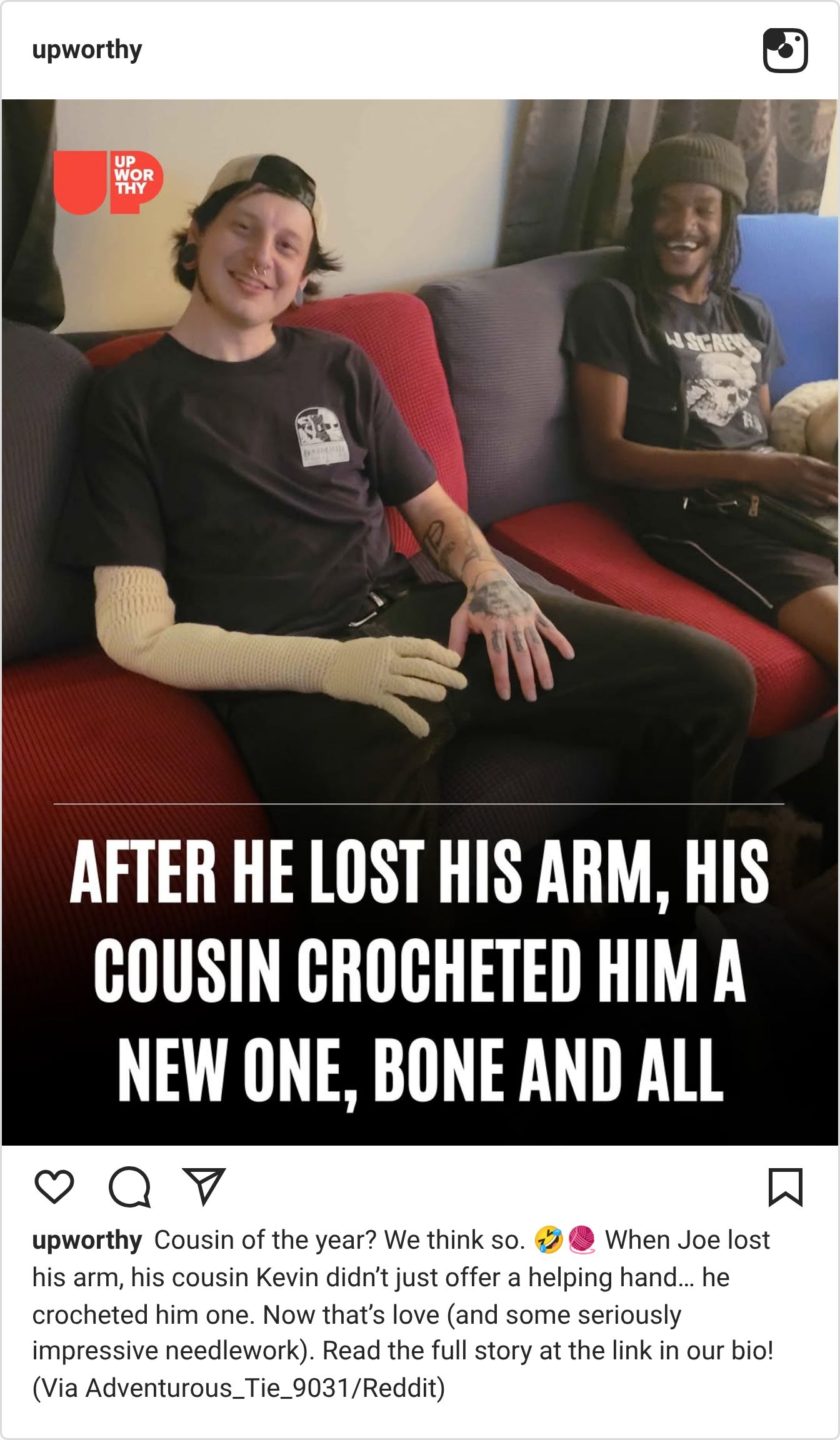
Cousin of the year? We think so. 🤣
 | ||
A song in a bank commercial was never destined to be a hit. Then the Carpenters saw the ad. | ||
The commercial is all but forgotten. But we all know the song. | ||
By Heather Wake | ||
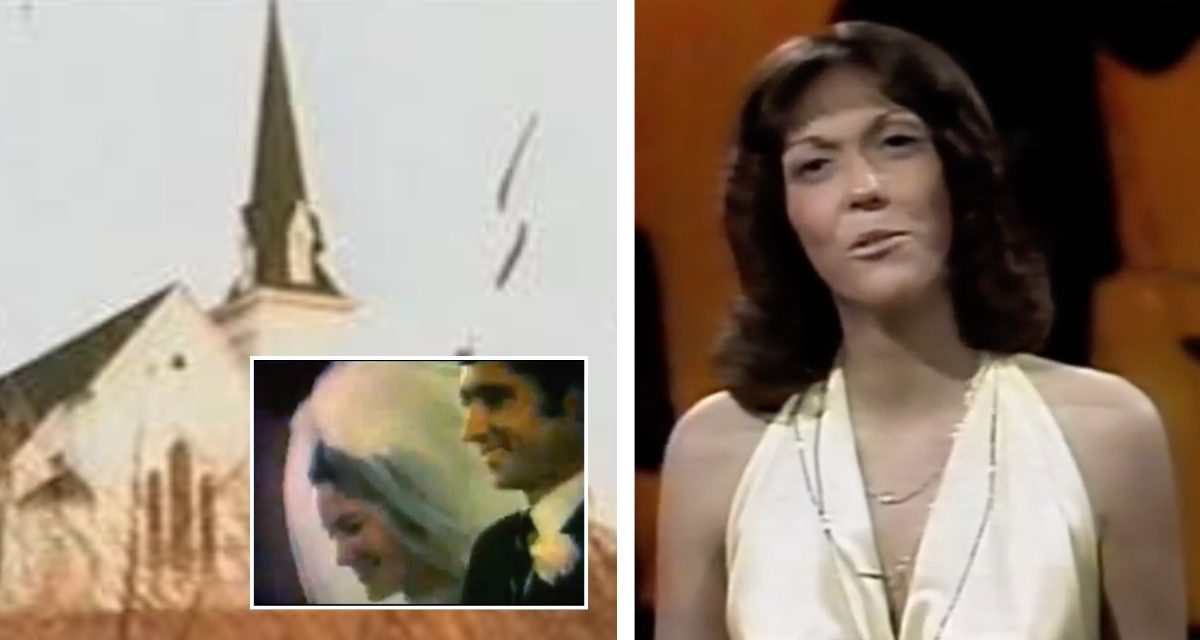
Sure, there are old-school commercial jingles that live in our heads rent-free. But a special few have actually gone on to become full-blown chart-toppers. “We’ve Only Just Begun,” made famous by the Carpenters, is one of those songs. | ||
Back in 1970, Crocker National Bank (later acquired by Wells Fargo) sought a way to expand its brand beyond that of a conservative institution to appeal to younger customers, including young newlyweds. | ||
|
An Upworthiest Quiz
Before becoming a world-famous mystery writer, Agatha Christie worked in which field?
Yesterday’s Results
In yesterday’s issue, we took a trip down memory lane with Rob Lowe, Gen X nostalgia, and a few second chances.
And we asked: What piece of obsolete technology do you secretly miss the most? Film cameras and printed photos ran away with it, taking nearly half the vote. There’s something about holding a real photograph that a camera roll just can’t quite replace.
Making mixtapes (16.2%)
🏆 Film cameras and printed photos (48.3%)
VHS tapes and video stores (16.2%)
Answering machines and landlines (19.3%)
Upworthiest reader, Sunflower Pat, spoke the majority. “Really would rather have a photograph to put into my album then have to use my phone to view favorite shots & memories…”
 | ||
Happiness researcher reveals the ‘enduring’ secret to being happy in the second half of life | ||
Don’t worry. Be happy. | ||
By Tod Perry | ||
Happiness researcher Dr. Arthur Brooks says that one of the most important things people can do as they enter the second half of their life is to focus on internal well-being rather than satisfying all of their wants. Even though this may feel like it runs counter to how many live the first half of their lives, he says it’s the best way to find joy in middle age and beyond. | ||
Brooks is a professor at Harvard Kennedy School and Harvard Business School, author of From Strength to Strength and Build the Life You Want (with Oprah Winfrey) and is a lifelong student of the science of happiness. He says the key to finding it in the second half of life is recognizing when enough is enough and reducing unnecessary desires. | ||
|

