

Annie Reneau is asking us to sacrifice Thursday for a better weekend, which feels either brilliant or like a trap laid by Wednesday. We're also revisiting status symbols that stopped mattering after 40, the long fight for proper credit behind "Killing Me Softly," and California's decision to bring back beavers after 70 years. Sometimes the fix is doing less. Sometimes it's adding rodents.
 | ||
Life-changing hack for more enjoyable, restorative weekends: Sacrifice Thursday | ||
People swear it makes weekends feel so much longer. | ||
By Annie Reneau | ||
When you work a standard 40-hour, Monday-through-Friday job, weekends are precious. Two full days to relieve stress, relax, restore, and reinvigorate yourself without work pressures or time constraints. | ||
However, many people don’t find their weekends as enjoyable or restorative as they should be because they’re often catching up on things around the house that didn’t get done during the week—cleaning, organizing, laundry, etc. But there’s a hack for that. It’s called “Thursday night.” | ||
|
 | ||
10 people over 40 share the ‘status symbols’ they chased in the past that have ‘lost all meaning’ | ||
“Nice cars. Once you realize that a Ford will go just as far as an Audi, you stop chasing it.” | ||
By Tod Perry | ||
People pursue status for many reasons, whether it’s a C-suite office, a $100,000 car, a house in a desirable neighborhood, or a conventionally attractive spouse. Sure, money and luxury items can bring us joy. But often, people buy expensive things or get caught up in grind culture just to impress others, and what they acquire leaves them feeling empty. | ||
Keeping up appearances also costs a lot of money. While some people wince every month when they have to make a $1,500 car payment, others are happy with their old, paid-off car and invest the $1,500 instead of spending it on a depreciating asset. | ||
|
Kae-Lin is investing in herself, her community, and her home. By partnering with Habitat in Columbia City, she was able to find a home for herself and her adorable cat, Bubbles.
For 50 years, @habitatforhumanity has worked around the world to expand access to safe, affordable, and sustainable housing.

 | ||
She wrote ‘Killing Me Softly’ on a napkin in 1971. It took decades for her to get the credit. | ||
Roberta Flack’s biggest hit began with a woman nobody credited. | ||
By Patrick Hamilton | ||
Some songs feel like they’ve always been a part of us. No matter how long they’ve been around, they feel like timeless tunes woven into the fabric of our lives. One could argue that “Killing Me Softly (With His Song)” is one such song. | ||
You’ve undoubtedly heard Roberta Flack’s soulful, intimate 1973 version. It peaked at #1 around the world and became a staple of that decade’s soul-infused hits. In 1996, Lauren Hill’s version with The Fugees introduced a new generation to the song, layering in a hip-hop beat sampled from A Tribe Called Quest’s “Bonita Applebaum.” | ||
|
An Upworthiest Quiz
What is a “mondegreen”?
Yesterday's Results
In yesterday's issue, we shared a resurfaced clip of young Michael Jackson and Roberta Flack singing “When We Grow Up”.
And we asked: What makes you feel your age the fastest? 38.2% of you chose having to explain obsolete technology. Nothing like a tiny reminder that the calendar has been moving this whole time, and that the calendar used to be made of paper.
Hearing my childhood music in a grocery store (21.7%)
Meeting an adult born after 2000 (33.9%)
Getting excited about a household appliance (6.2%)
Having to explain obsolete technology (38.2%) 🏆
Upworthiest reader Ted Grider found the perfect example. “ What? They actually played the national anthem at midnight right before they turned off TV programs for the evening?”
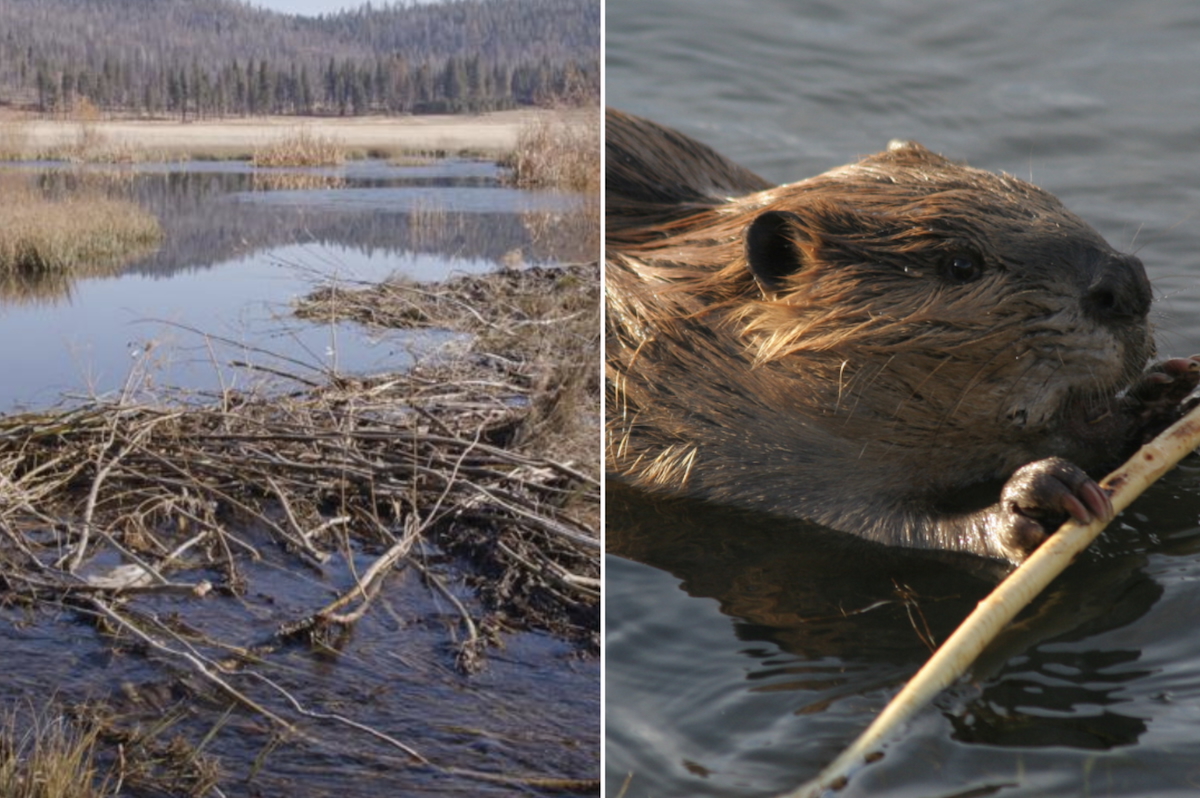 | ||
California brought back beavers for the first time in 70 years, and the results are already amazing | ||
Native wisdom and ancient rock paintings save the day. | ||
By Kat Hong | ||
Deep in the Sierra Nevada foothills on the Tule River Indian Reservation, tribal member Kenneth McDarment had passed by an ochre-red pictograph countless times throughout his life, a simple yet unmistakable image of a beaver with four paws and a distinctive paddle tail. Estimated to be between 500 and 1,000 years old, this ancient artwork adorned the walls of a rock shelter alongside other paintings of wildlife, humans, and geometric designs created by the Yokuts people. | ||
To McDarment, this beaver image seemed like just another beautiful piece of Native art. That is until he looked at it again, this time seeing it clearly with fresh eyes. | ||
|

