

Upworthy’s resident practical idealist Annie Reneau kicks things off with a solution to squatting that sounds like the premise of a sitcom: beat them at their own game. Then Heather Wake takes us into a locker room with Wil Wheaton, and finally we discover that Americans apparently have a body-language tell visible from across the room.
 | ||
Man finds genius loophole to beat squatters at their own game. Homeowners say he’s a hero. | ||
“All I’m doing is becoming a squatter and flipping this process on them.” | ||
By Annie Reneau | ||
Squatters’ rights laws are some of the most bizarrely misused legal realities we have, and something no one seems to have a good answer for. Most of us have heard stories of someone moving into a vacant home and just living there, without anyone’s permission and without paying rent, and somehow this is a legal question mark until the courts sort it out. | ||
According to The National Desk, squatters’ rights are a carryover from British property law and were created to ensure that abandoned property could be used and to protect occupants from being kicked out without proper notice. The argument is that it’s better to have someone openly living in a home and taking care of it, properly maintaining it, versus it laying abandoned and rotting away. Families and residents add value to a community, and those residents should have rights, or so the reasoning goes. | ||
It should go without saying that squatter law isn’t meant to allow someone to just take over someone else’s property, but sometimes that’s exactly what happens. | ||
|


It’s Suicide Prevention Month, and we’re reminding Veterans that help is available at every stage, not just in moments of crisis. Whether navigating a career change, relationship challenges, health concerns, or simply a difficult season of life, reaching out early can make a difference.
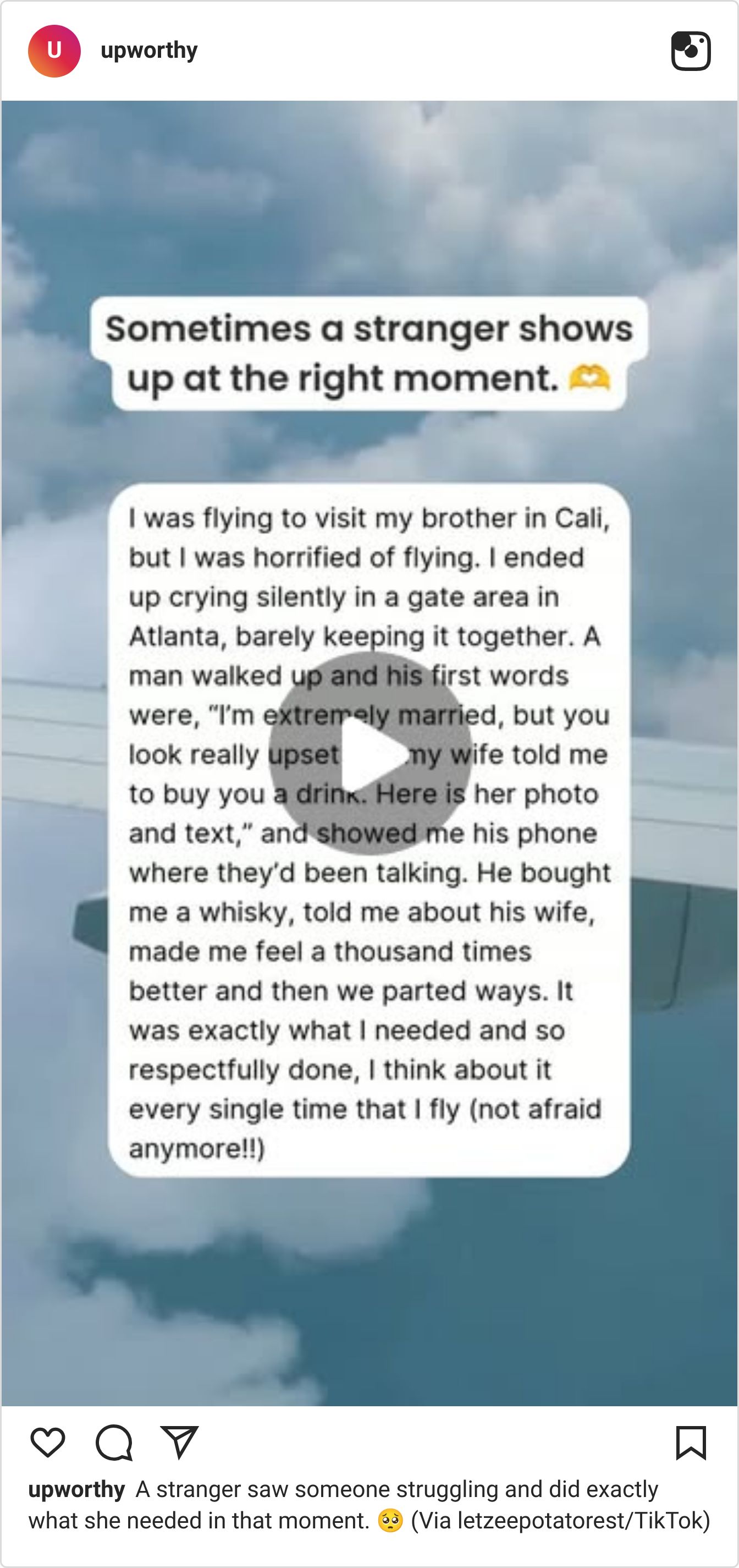
A stranger saw someone struggling and did exactly what she needed in that moment. 🥺
 | ||
Wil Wheaton’s locker room story is a perfect example of why homophobic jokes are a problem | ||
His thoughts came as a response to Dave Chapelle’s controversial stand-up performance. | ||
By Heather Wake | ||
Comedy can be uplifting. And it can also be downright destructive. The rise of cancel culture has made us take a hard look at what we normalize for the sake of a good joke. And with Dave Chappelle’s controversial comedy special, The Closer, which includes jokes that can be perceived as cruel or homophobic jabs by the LGBTQ community and allies. | ||
At the same time, comedy is supposed to be disruptive, is it not? It’s meant to be audacious, bawdy, outrageous. And let’s not forget it’s often said sarcastically, meaning we don’t really believe what’s being said … right? Wil Wheaton has previously given a brilliant take on how to separate the art from the artist. This time though, he’s confronting the art itself and what makes it problematic. | ||
Wheaton is best known for playing Wesley Crusher on Star Trek: The Next Generation and Gordie Lachance in Stand By Me. He is also a voice actor who has worked on Teen Titans and League of Super Heroes. | ||
|
An Upworthiest Poll
Which unwritten rule of society would you most like formally enforced?
Yesterday’s Results
In yesterday's issue, we shared Ryan Reed's story about a Kansas police stop involving an ’80s pop icon that quickly became a photo shoot.
And we asked: What was the first music video ever played on MTV? 61% of you knew it was “Video Killed the Radio Star.” Honestly, MTV could hardly have opened with a more on-the-nose choice.
“Billie Jean” (15%)
“Video Killed the Radio Star” (61%) 🏆
“Take on Me” (6%)
“Money for Nothing” (18%)
 | ||
Americans are known to do this body language gesture, according to the CIA. | ||
The CIA says this one body language gesture is a dead giveaway you are an American | ||
It’s called the “American Lean.” | ||
By Emily Shiffer | ||
Americans have unique body language and gestures that set them apart from other countries and cultures. These American quirks, such as pointing and eating while walking are easily picked up by non-Americans who are quickly able to identify us. | ||
Besides a certain demeanor, other American indicators include clothing choices like backwards baseball caps and wearing sunglasses on one’s head. | ||
According to Jonna Mendez, the Central Intelligence Agency’s (CIA) former Chief of Disguise, there is one specific posture that has been deemed a dead giveaway of an American identity. It’s called the “American Lean.” | ||
|
