

Today, in the Upworthiest...
 | ||
A mom got a huge response when she urged parents not to let their kids be too "weird." | ||
Mom and former teacher sparks thoughtful debate with 6 words: ‘Don’t let your kid be weird’ | ||
Unique and weird are not the same thing. | ||
By Evan Porter | ||
Most parents would agree that we want to encourage our kids to be themselves. But most parents also know the excruciating pain of their child coming home in tears because someone teased them for being different. | ||
The question parents have always struggled with is, how do we guide them? Do we encourage them to “fit in” to avoid cruelty and bullying? Or should we let them be as weird as they want, no matter the cost? | ||
|

Mold exposure doesn't hit once and leave. Half of homes show signs of mold or dampness, and when toxins build up, your immune system stays switched on.
Months later, it can show up as the 2pm crash you blame on sleep, the workout that feels heavier than it should, or the name you can't pull up in a meeting. Multiple health issues that are actually caused by one common root-cause most doctors miss.
MoldCo's Home Dust Test gives you a safety level score for your home and clear next steps: either your home has a low risk score and you stop wondering, or you know exactly what needs fixing.
One test beats years of wondering.
It’s funny how the smallest, most ordinary messages can say the most about love. 🥹


 | ||
Anxious remote worker wins lawsuit after work forced her to be on camera during a meeting | ||
She told them that being on camera made her feel overwhelmed. | ||
By Tod Perry | ||
For people who work remotely, the freedom and flexibility can be a life-changer. Working from home makes it easy to navigate family life, and not having a commute can save you countless hours every month. However, one part of remote work a lot of people would love to avoid is having meetings via webcam, whether on Zoom, Microsoft Teams, or Google Meet. | ||
Not everyone is comfortable having a camera in their face, and they can feel anxious about staring at themselves on video for long stretches of time. Some also worry about coworkers being able to see inside their homes. But it’s important for workers to have their cameras on so they can see each other’s facial expressions; after all, body language is a huge part of communication. Employers think it’s important, too. | ||
A survey from Vyopta, a software company, found that 92% of executives say that those who keep their cameras off do not have a long-term future at the company. | ||
|
An Upworthiest Poll
Hi! I’m Greg, and I put together The Upworthiest. I’ll be out of the office for the next week. Our fun, uplifting polls and quizzes will resume when I return.
Yesterday’s Results
What's your actual move for making friends as an adult? More than half of you go into the world and join in. I love it!
Join the thing. Club, league, class, whatever. (53.9%)
Befriend whoever I already work with. (10.5%)
Talk to strangers and find out. (23.7%)
I have my people. Roster's closed. (11.8%)
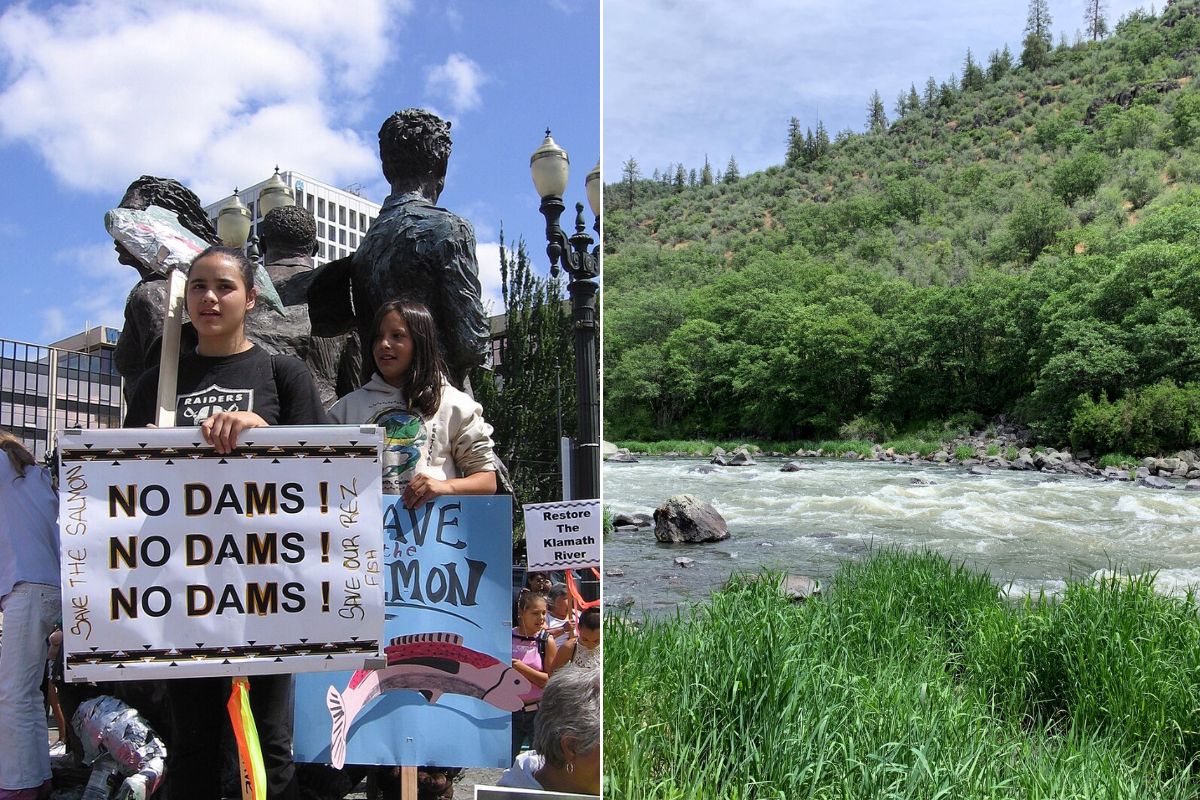 | ||
Engineers blew up 4 dams on a dying river. Now the salmon population is exploding. | ||
Ten months of work undid 100 years of damage. | ||
By Evan Porter | ||
The ancient and beautiful Klamath River runs along the border of southern Oregon and Northern California. For millions of years, it was a fertile breeding ground for fish—one of the largest salmon runs in the country, in fact—a lifeline for wildlife and vegetation in the area, and more modernly, a source of food for local tribes. | ||
But in the early 1900s, what was then known as the California Oregon Power Company (COPCO) built a series of hydroelectric dams that would harness the river’s power and turn it into electricity that could be sold. It decimated the area. The dams cut the salmon off completely from more than 400 miles of open river. They also degraded water quality and supported the growth of toxic algae. | ||
On top of that, the hydropower dams were underperforming and causing more problems than they were worth. COPCO, now PacifiCorp, got only about 2% of its energy from the dams, and it simply wasn’t worth the investment to upgrade them to meet current standards. | ||
|
