
In partnership with


A great phrase for when you've just gotta leave without explanation.
By Tod Perry
"Irish goodbye" is a term for when someone slips out of an event without telling anyone, avoiding the awkwardness of announcing their departure. (Though the Irish didn't necessarily invent the phenomenon.) But what do we call it when someone decides to turn tail and leave a situation immediately, without any explanation at all? These days, there doesn't seem to be a name for a sudden, unexpected exit. Back in the 1800s, however, there was one, courtesy of the third president, Thomas Jefferson.
The phrase: "My name is Haines."
This may sound a bit strange, but it all stems from an unusual interaction Jefferson had while in office with a member of the opposition party. According to Monticello.org, The Weekly Picayune originally published the story in New Orleans on February 17, 1840.
The Drink Everyone’s Reaching For This Spring 🍸✨

Spring doesn’t have to mean a packed schedule and another drink you regret tomorrow.
This season, I’m reaching for something different: Vesper by Pique.
Pique is known for blending ancient botanicals with modern science to create elevated wellness essentials. Vesper might be my favorite yet. It’s a non-alcoholic, adaptogenic aperitif that delivers the relaxed, social glow of a cocktail. Without alcohol or the next-day fog.
It’s what I pour when I want something special in my glass on a bright spring evening. Each sip feels celebratory and uplifting. Relaxed body. Clear mind. No haze. No sleep disruption.
Crafted with L-theanine, lemon balm, gentian root, damiana, and elderflower, Vesper is sparkling, tart, and beautifully herbaceous.
If you’re ready for a new kind of happy hour, try Vesper here. 🌿✨

"I have no words to explain how this made me feel."
No one is above having a bad day, but in South Korea, there's a specific phrase said to loved ones to acknowledge the bravery it takes just to show up. Often, when you're having a bad day, week, or even month, it can feel never-ending. The hits seem like they won't stop coming, and it can feel impossible to escape the dark cloud that decided to rain on any thought of a parade you could have.
When these things happen, it can feel isolating, as if no one understands how hard you're trying to keep moving forward without falling apart. No matter how much money or security someone has, they're not immune to this very human experience. That's likely why the Korean phrase 수고했어, pronounced "soo-goh-het-suh," is bringing so many people to tears as they learn about it for the first time.
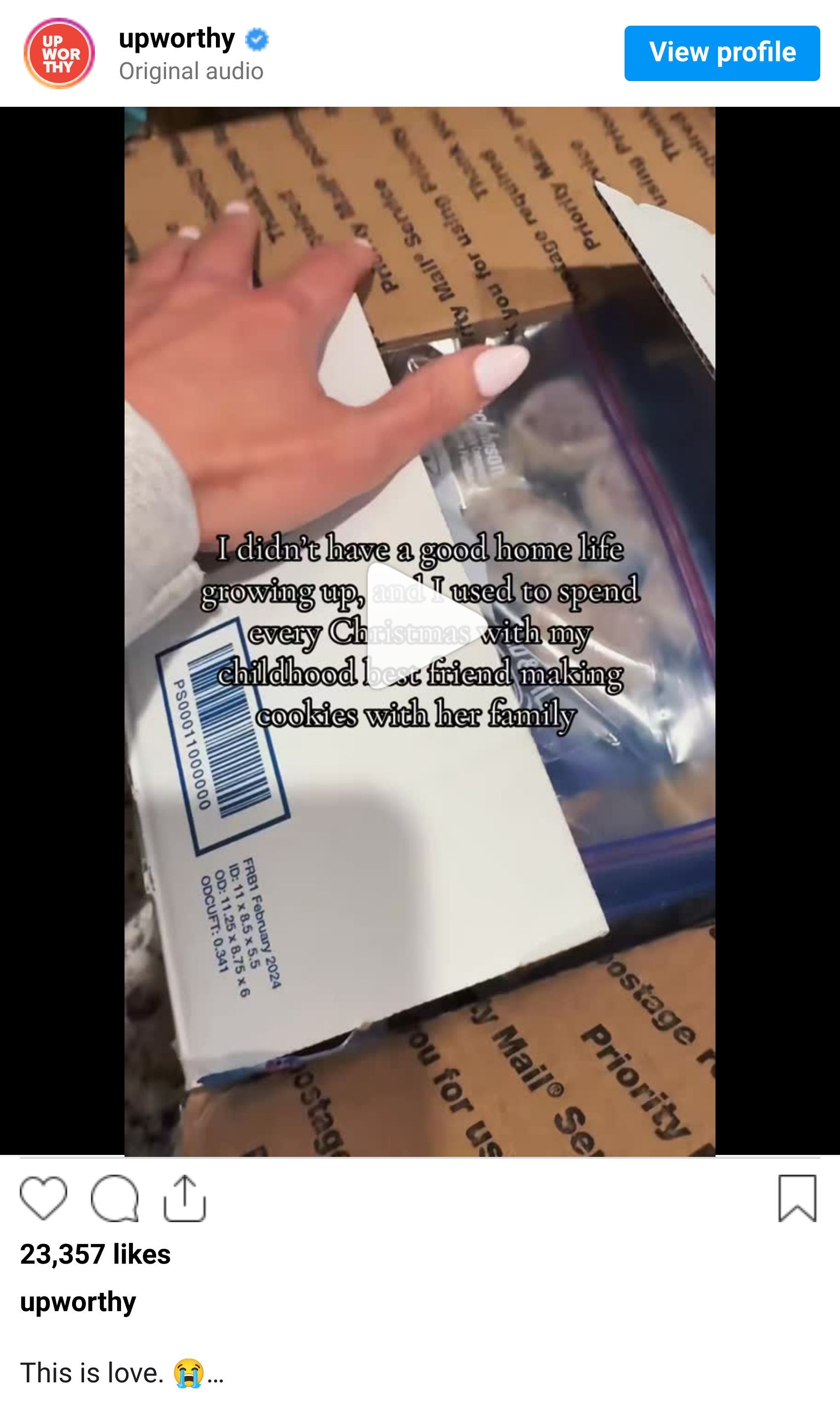
This is love. 😭

Some of it is Gen Z slang, but Gen Xers and Millennials took a hit, too.
By Tod Perry
Words can go in and out of fashion, just like clothing, music taste, and hairstyles. A phrase may start out funny or clever, but overuse will render it meaningless, cringe-inducing, and most likely, annoying.
A recent example is “6-7,” a verbal meme popularized in schoolyards that quickly evolved into a popular 2025 Halloween costume for parents and is now one of the most grating phrases. It even has an accompanying singsong delivery that one can hear just by reading it.
The good news is that, in cases where some phrases are overused, a group of linguists at Lake Superior State University (LSSU) has maintained a Banned Words List for the past 50 years, a tradition that highlights the “importance and evolution of language.” This year, over 1400 words were submitted to LSSU from all 50 states and as far away as Uzbekistan. The linguists selected 10 words this year for banishment and added a rationale for each selection. Number one should not come as a shock to anyone.

The award-winning structure is a huge step forward for sustainable design.
By Evan Porter
Michael Daube, founder of the nonprofit CITTA, wanted to bring a school for girls to one of the most rural and conservative parts of India. In the region known as Rajasthan, the literacy rate for women was among the lowest in the country. There were few to no opportunities for girls to learn, and, for many, the only path in life was marriage.
There was just one problem with the plan: the rural desert community called Jaisalmer had almost no infrastructure to support a building that would meet the potential students' needs, and the nearest city was 40km away. Further complicating things, it would be challenging to build a low-tech outside venue for kids to learn in because of sweltering desert temperatures that routinely reach over 120 degrees Fahrenheit.
Luckily, architect Diana Kellogg was up to the challenge.
