
A woman listens to a harsh truth.
11 people share the ‘harsh truths’ that helped them become far more emotionally mature
“How people treat me is not my fault, but I am responsible for what I tolerate.”
By Tod Perry
It can be heartbreaking to realize that someone you love can’t live up to your expectations. It can be even harder to look back at choices you’ve made in life and know you could have been kinder or put more effort into things that really mattered.
However, when we bravely face the hard truths we have to learn in life, we become emotionally stronger. The struggle may be painful at the time, but as the saying goes, “We are stronger in the places where we’ve been broken.” On the other side of the emotional Rubicon is healing, wisdom, and strength.
A poster in Reddit’s emotional intelligence subforum asked users a very personal question that got to the heart of how they became stronger people: “What’s a harsh truth you had to accept to become emotionally mature?” The responses showed the power of taking personal responsibility and seeing yourself and others with rigorous honesty.
| Read the story |

A man reading a book and the cover of "The 48 Laws of Power" by Robert Greene.
Self-made millionaire read 997 personal finance books. Here are the 5 he says actually changed his life.
Mark Tilbury knows his stuff.
By Kat Hong
Mark Tilbury left school at sixteen with no qualifications and a bunch of haters telling him he wouldn’t amount to much.
He didn’t listen to them. Instead, he did something quite remarkable: he read. And read. And read. Nearly a thousand books on personal finance, investing, mindset, and business strategy—not because it was easy, but because he believed that if he could just understand how money and success really worked, he could build a different kind of life.
Guess what? He was right. Today, Tilbury celebrates life as a self-made millionaire with multiple businesses and a social media following of millions who tune in for exactly that kind of hard-won wisdom.
| Read the story |
They don’t call him the “Man with the Golden Arm” for nothing. ♥️

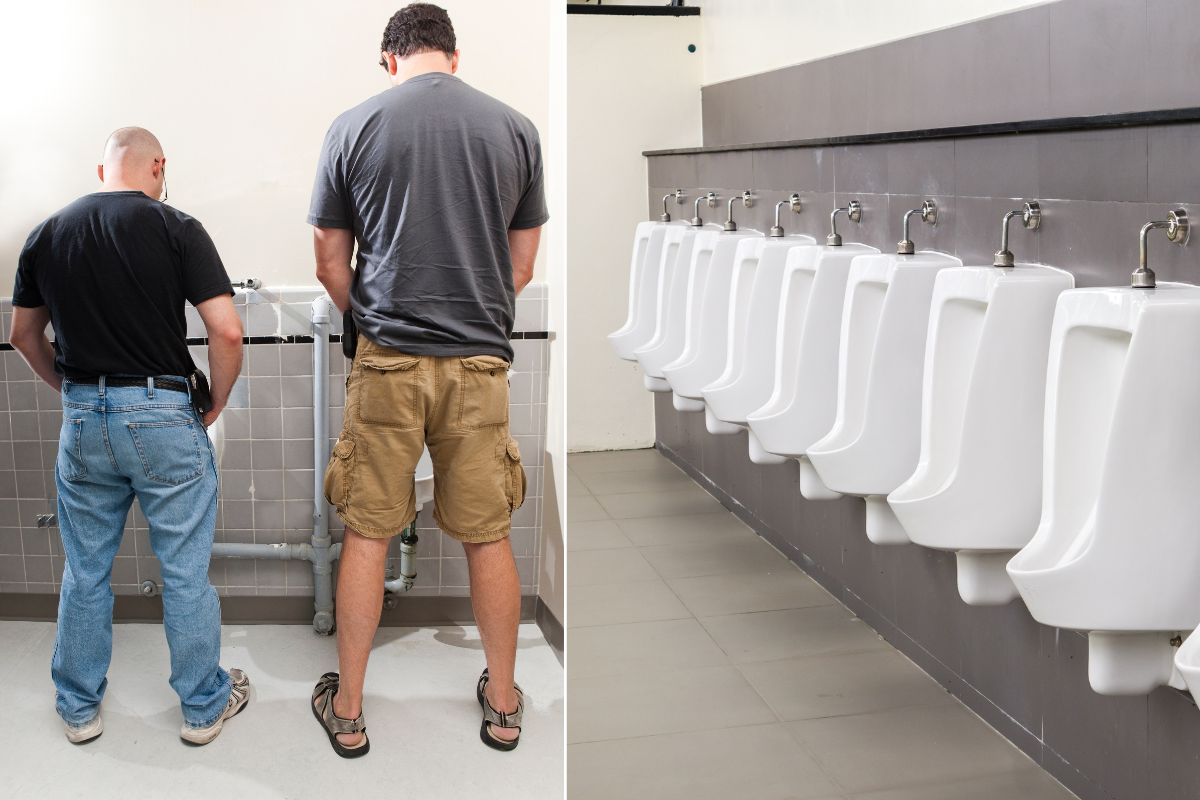
A fascinating decades-old study revealed the science behind “urinal etiquette.”
1976 research study confirms science behind ‘urinal etiquette’
The “buffer urinal” is more important than we realize.
By Evan Porter
There’s a theory that most men, and people in general, intuitively understand “urinal etiquette.” It’s the art and science of where to stand in relation to other men when using a public restroom. Stand too far away, and you risk coming across as standoffish or rude. Stand too close, and you’ll make the other person uncomfortable.
Most people prefer to have a “buffer” between themselves and strangers, and it’s not limited to urinals or public restroom stalls. When given the option, most of us will sit at least one seat away from the nearest stranger in a movie theater or auditorium. We’ll leave a bench or treadmill between ourselves and a fellow gym-goer.
| Read the story |

It seems like most people are feeling wiped out these days. There's a reason for that.
Psychologist explains why everyone feels so exhausted these days and it makes a lot of sense
“A gentle reminder about why you are utterly exhausted…”
By Annie Reneau
We’re more than four years past the onset of the COVID-19 pandemic, and it’s been a weird ride, to say the least. These years have been hard, frustrating, confusing and tragic, and yet we keep on keeping on. Except the keeping on part isn’t quite as simple as it sounds.
We’ve sort of collectively decided to move on, come what may. This year has been an experiment in normalcy, but one without a testable hypothesis or clear design. And it’s taken a toll. So many people are feeling tired, exhausted, worn thin (“like butter scraped over too much bread,” as Bilbo Baggins put it) these days.
But why?
| Read the story |
