

In this issue of The Upworthiest, Cecily Knobler brings homework from Stanford: imagine three versions of your life five years from now. Then a woman in her 60s explains why she lived life "back to front," a distraught teacher's viral post gets an answer from the kids themselves, and a YouTuber reveals what the two dots in the yin-yang mean.
 | ||
Stanford professors share 3 questions to help you decide where to take your life next | ||
The Odyssey Plan can help all of us reimagine our life’s possibilities. | ||
By Cecily Knobler | ||
Most of us get stuck at some point in life. Sometimes, figuring out where to go next requires imagining a different existence, no matter how wild it may be. Visualizing different paths could be the push you need before actually taking them. | ||
Two professors and best-selling authors at Stanford University, Bill Burnett and Dave Evans, constructed the Odyssey Plan to help people do just that. The idea is simple: Three questions can help a person envision where they could be in five years. | ||
|
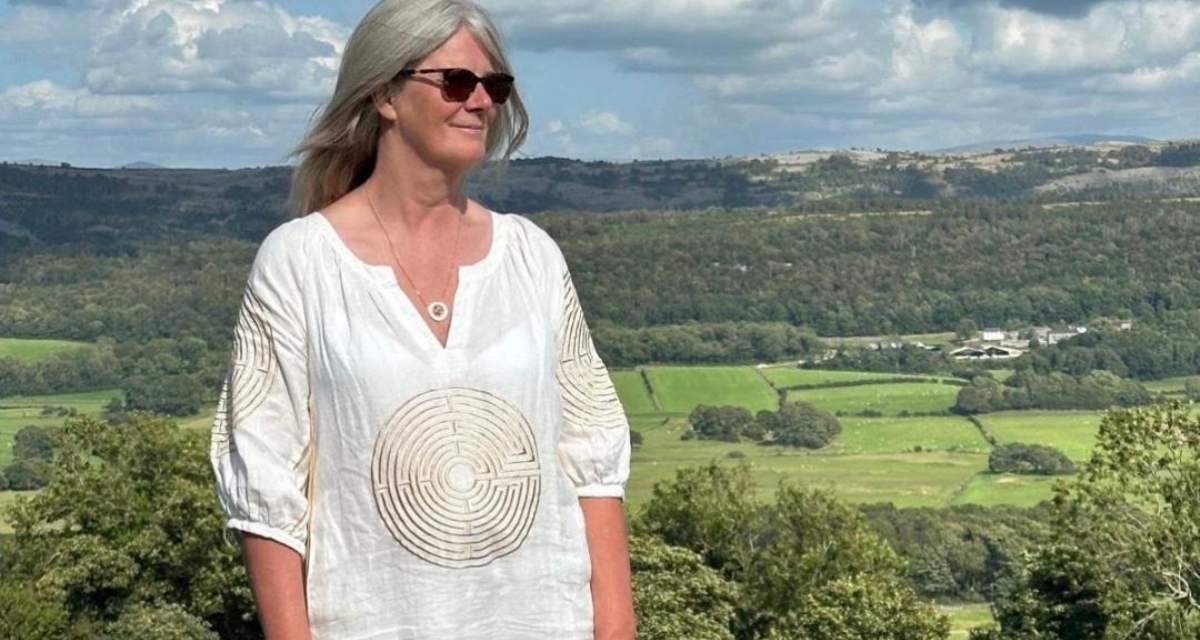 | ||
A woman in her 60s explains how living her life ‘back to front’ brought her true happiness | ||
“This is the definition of ‘unlearning,’ which I feel is something valuable for all of us.” | ||
By Cecily Knobler | ||
We so often ask, “If you could go back in time, what would you change?” While it can be good to reflect, this bittersweet question suggests roads not taken and irreversible choices. The fact is that things aren’t always permanent. One woman beautifully explains how. | ||
Under the social media name Evan Bnormal, Evan Brady explores relationships, career, health, and other advice by talking to people across many generations. Like many social media content creators, he approaches people who look like they might have a story to tell. What sets him apart is the genuine care he shows the people he interviews. | ||
|
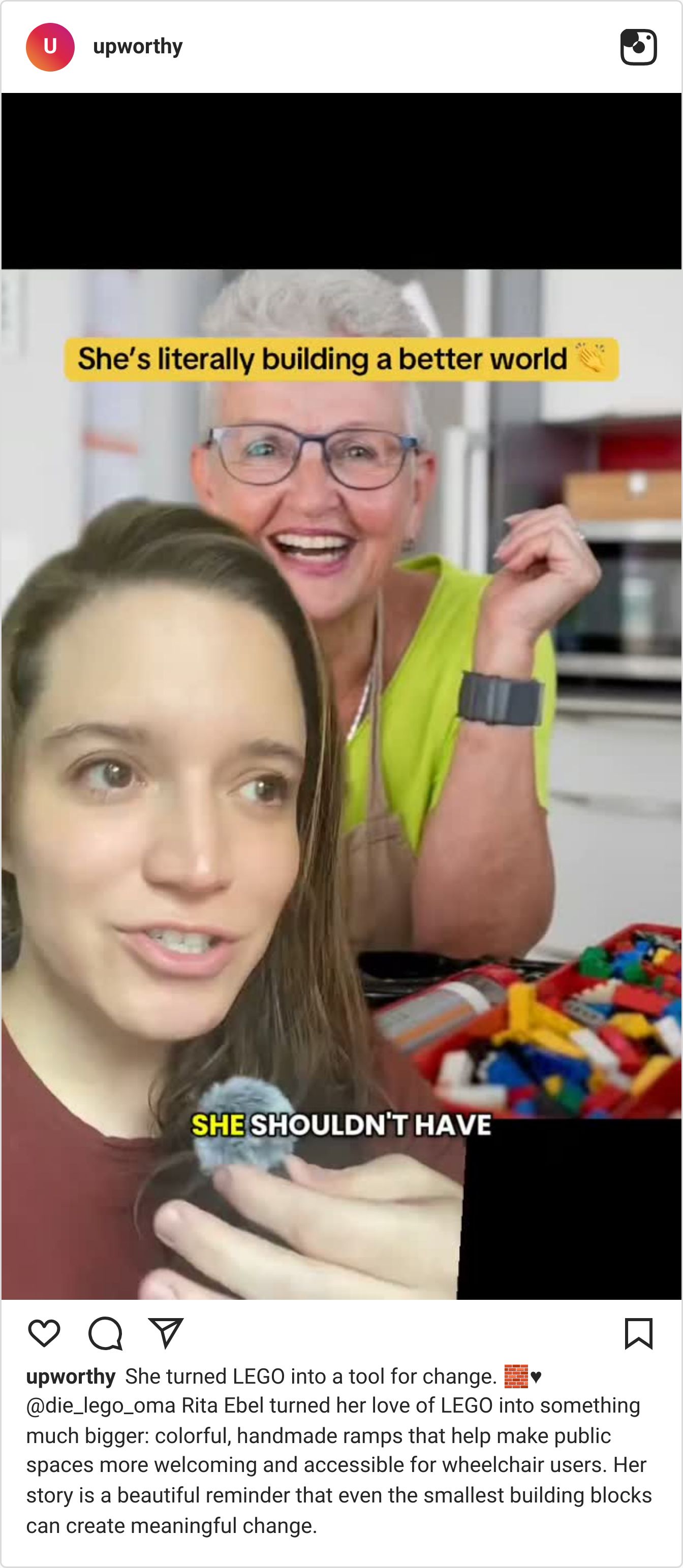
She turned LEGO into a tool for change. 🧱
 | ||
A distraught teacher went viral because his students couldn’t read. Then the kids spoke up. | ||
Gen Z wants a voice in this conversation. | ||
By Evan Porter | ||
Literacy is a superpower and a fundamental human right. But overall, reading is on the decline worldwide and, perhaps most egregiously, in America. This is especially problematic for young people who are still developing their reading comprehension and critical thinking skills. | ||
Educators all over are sounding the alarm, and it’s a critical conversation to have. But how we go about having that conversation is equally important. | ||
|
An Upworthiest Quiz
Which writing system was invented on purpose by a single king in the 1400s so ordinary people could learn to read?
Yesterday’s Results
In yesterday’s issue, we shared Tod Perry’s story on the Harvard expert’s “superhero” question that makes you instantly more likable.
And we asked: Which classic self-help book gave us the line “To be interesting, be interested”? More than two-thirds of you knew it was from Dale Carnegie’s classic 1936 self-help manual.
How to Win Friends and Influence People (67.5%)
The Power of Positive Thinking (9.3%)
The 7 Habits of Highly Effective People (19.0%)
Think and Grow Rich (4.2%)
 | ||
What we know about the yin-yang symbol might be wrong. It’s not about balance at all. | ||
“Nature is never in balance. Nature is in motion.” | ||
By Jacalyn Wetzel | ||
Remember in the ’90s when yin-yangs were everywhere? Necklaces, T-shirts, hats, shoes, wallpaper, you name it. That Chinese symbol was plastered on everything like a good-luck talisman meant to symbolize perfect balance. Or at least, that’s what we in the Western world thought. | ||
It turns out we might have been completely wrong. Tang, a man who runs the YouTube channel TangSaying, recently corrected the information Westerners received about the yin-yang symbol. He explains everything from the true meaning of the symbol to what the two small dots within it mean. His explanation causes you to look at the symbol in a new light, suddenly making its shape make sense. | ||
|
