
In this issue, Evan Porter shares how to make friends with your feathered neighbors, Carl Sagan makes sense of a seemingly impossible scientific concept, and Annie Reneau has a photo that'll make you question whether you can trust your own eyes.
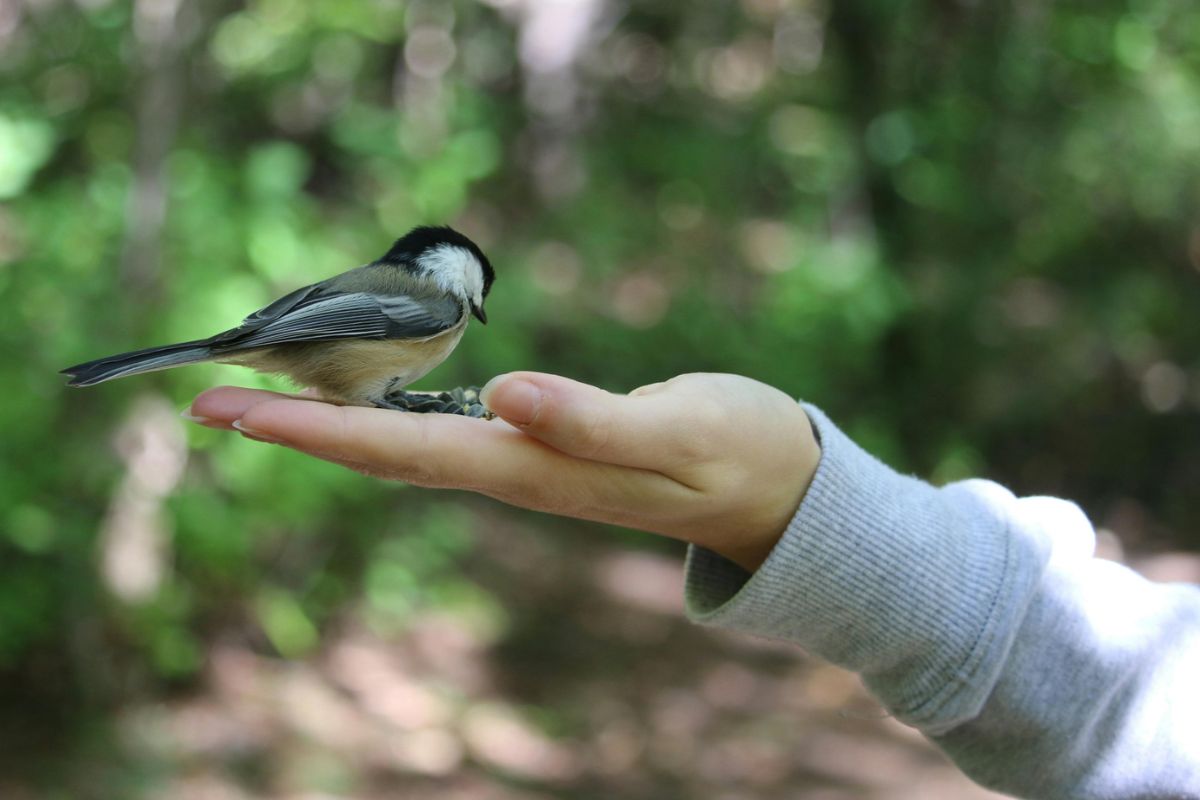 | ||
How and why you should make friends with the common songbirds in your backyard. | ||
The common backyard birds that can remember your face, and sometimes bring you gifts | ||
4 easy steps to make some new winged-friends. | ||
By Evan Porter | ||
Many of us are fortunate to have a wildlife preserve right in our backyards, or just outside of our windows. City, rural, suburban—almost anyone can look outside and find a squirrel, a chipmunk, or even a strange insect we’ve never seen before. | ||
Perhaps the most common animal most humans see on an everyday basis is also the most fascinating: Your ordinary backyard birds. While not as intelligent and mysterious as the crow or raven, these birds are surprisingly adept at forming bonds with humans nonetheless. | ||
|
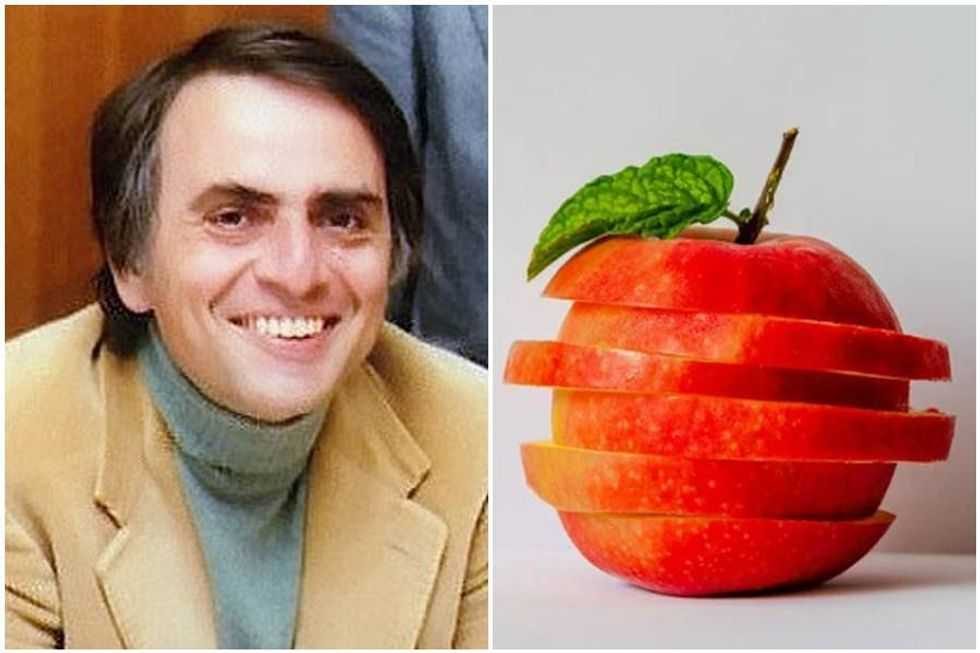 | ||
Carl Sagan used a sliced apple to perfectly explain the fourth dimension. | ||
46 years ago, Carl Sagan beautifully explained the fourth dimension using a sliced apple | ||
Carl Sagan was the Mister Rogers of complex scientific concepts. | ||
By Tod Perry | ||
How do you explain the concept of a fourth dimension to humans who are only able to see in 3-D? Physical space can be measured in height, width, and depth. What is there beyond or in addition to those three dimensions? How can we understand the existence of a dimension we cannot picture? | ||
Thankfully, we had Carl Sagan, one of the greatest science communicators of his time, to help us visualize a fourth dimension. Perhaps best known for his research into extraterrestrial life, Sagan was among the first to demonstrate that life could have existed on Mars. Sagan possessed a unique gift for demystifying complex scientific concepts, making them accessible and thrilling for the general public. He could be described as a scientific Mister Rogers: friendly, a wonderful storyteller, and able to distill difficult lessons into their simplest form. | ||
|
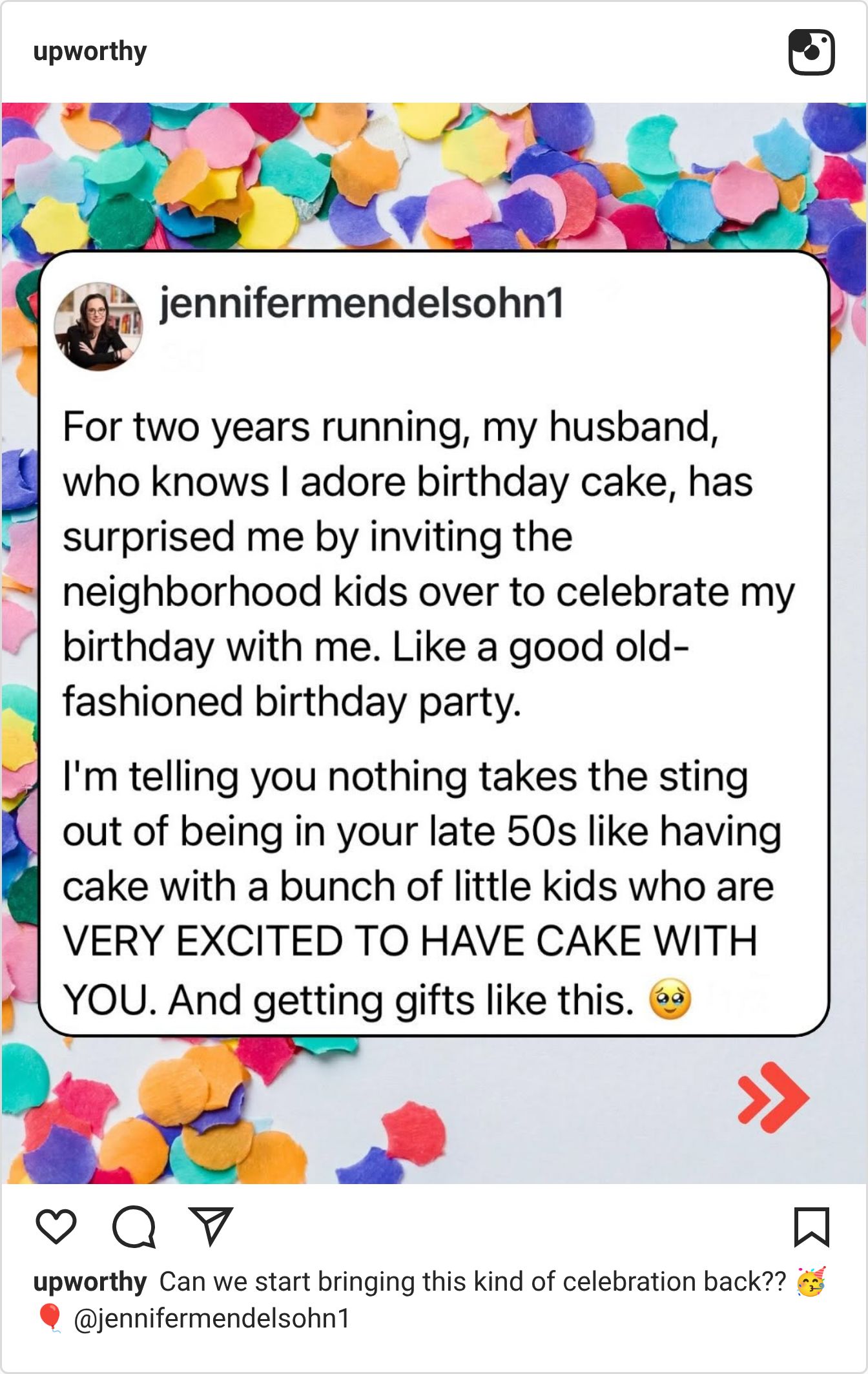
Can we start bringing this kind of celebration back?? 🥳
 | ||
If you see a person and two dogs in this photo, look again. It’s an optical illusion. | ||
It takes a while to see it, but there aren’t two dogs in the photo. | ||
By Annie Reneau | ||
Optical illusions are wild. The way our brains perceive what our eyes see can be way off base, even when we’re sure about what we’re looking at. Plenty of famous optical illusions have been created purposefully, from the Ames window that appears to be moving back and forth when it’s actually rotating 360 degrees, to the spiral image that makes Van Gogh’s “Starry Night” look like it’s moving. | ||
But sometimes optical illusions happen by accident. Those ones are even more fun because we know they aren’t a result of someone trying to trick our brains. Our brains do the tricking all by themselves. | ||
|
An Upworthiest Quiz
What is the traditional collective noun for a group of finches?
Yesterday’s Results
In yesterday's issue, we shared a photographer's remarkable portraits of strangers before and after they smiled.
And we asked: The word "photography" comes from Greek roots that essentially mean what? 71.0% of you knew it was drawing with light. The word combines the Greek roots for light and writing or drawing.
Capturing a moment (11.2%)
Drawing with light (71.0%) ✅
Preserving a memory (10.4%)
Seeing the invisible (7.3%)
Upworthiest reader Kakgab got it right, but might have been cheating a little. “Married to a Greek and have lived there part-time for decades”
 | ||
1 in 10 people have such unusual personality trait combinations that researchers call them ‘mutants’ | ||
These major outliers break all the standard models. | ||
By Evan Porter | ||
There are a lot of personality tests out there, and we humans are endlessly fascinated by them. There are the ones popular in pop-psychology like Myers-Briggs and the Enneagram. There are highly clinical and academic models like the HEXACO and the MMPI. | ||
One of the most widely used and respected personality tests in academic and scientific circles is the Big Five, or OCEAN model. It scores people based on five traits: Openness, Conscientiousness, Extraversion, Agreeableness, and Neuroticism. It doesn’t group people into concrete buckets with snappy names, like “The Innovator,” but your collective scores in the five areas it measures come together to tell a story about you. | ||
|

